

The Business Case for Sustainable Loyalty Cards: Making the switch in 2026
15 January 2026
The commercial landscape of 2026 has fundamentally shifted. We're seeing a real convergence of consumer ethics, fiscal policy, and tech advancement. If you're running customer engagement through loyalty schemes while still clinging to polyvinyl chloride (PVC)? You're not maintaining a standard; you're holding a liability.
The business case for sustainable loyalty cards has moved from the "nice to have" column straight into mission-critical territory. This isn't about ticking corporate social responsibility boxes anymore. We're talking financial sustainability, brand equity, and regulatory compliance. The physical loyalty card you put in a customer's hand? That's a statement. Make it count.
The Strategic Shift: Understanding the 2026 Loyalty Card Landscape
Here's what happened in 2025: True customer loyalty dropped to 29%. That's a 5% decline from 2024.
Customers aren't sticking around because of transaction histories anymore. They're looking for values alignment. And that physical loyalty card? It's become a meaningful statement of what your brand actually stands for.
The macro-economic picture makes this even more complicated. Loyalty budgets are rising (63% of execs are spending more). But here's the kicker: 45% of professionals are under intense pressure to prove the financial value and ROI per customer.
Key Market Dynamics 2025–2026
| Metric | 2024–2025 Status | 2026 Projection/Requirement |
|---|---|---|
| True Loyalty Rate | 34% (2024) | 29% and declining |
| Sustainability Influence | 56% importance | 73% of Millennials prioritize |
| Loyalty Budget Trend | Stable/Modest Growth | 41% intended increase |
| Key Measure of Success | Redemption Rates | Incremental LTV and Margin |

Why Plastic Cards Are Becoming a Liability
PVC has been the default since 1959. And it takes 400 to 500 years to decompose.
Every plastic card you issue is a permanent pollutant.
Here's the problem: 39% of Gen Z consumers have actively switched brands because of poor sustainability practices. That card designed to build loyalty? If it's plastic, it might be the exact thing driving churn.
Carbon Footprint and Manufacturing Impact
A single PVC card carries a carbon footprint of roughly 21 grams of CO₂. Scale that to the 500 million plastic cards issued annually in the UK, and you're looking at over 10,000 tonnes of CO₂.
Paperboard enviricards cut carbon emissions by 57%. The biogenic carbon stored in sustainably managed forest fibers? Those cards act as temporary carbon sinks. For every tree harvested, our partner Holmen Iggesund plant three more.
| Impact Category | Traditional PVC Card | Sustainable Paperboard Card |
|---|---|---|
| Carbon Footprint | 20g CO₂eq | 8.7g CO₂eq |
| Primary Resource | Petroleum-based | Wood Fibre |
| Recyclability | Negligible/Specialist | Recyclable in standard paper mills |
| End-of-Life Status | Landfill/Incineration | Compostable/Biodegradable to EN13432 |
The Role of Bio-based Coatings
Historical paper cards failed because they lacked durability. Not anymore.
Current solutions (like the Enviricard bio-coating) apply a thin layer of compostable cellulose that protects the card from daily wear while remaining fully biodegradable to EN13432 standards. You get highly durable loyalty cards without the negative impact of plastic waste.
The Financial Impact of Plastic Packaging Tax
Compliance in 2026 isn't about avoiding fines. It's about managing the escalating costs of putting non-recyclable materials on the market.
The UK Plastic Packaging Tax
As of April 1, 2026, the UK Plastic Packaging Tax rises to £228.82 per tonne. Individual cards are small. But for large-scale loyalty schemes, the cumulative weight and the tax bill adds up fast.
Extended Producer Responsibility and Eco-Modulation
Green-Rated Packaging: Materials that are widely recyclable get 9% discounts.
Red-Rated Packaging: Difficult-to-recycle materials face penalties. In 2026/27, red-rated fees are 1.2x the base fee. By 2028/29? 2.0x.
For a retail brand issuing 1 million cards annually, switching from red-rated plastic to green-rated recyclable cards can reduce fees by up to 50%.
Why Customers Actually Care About Sustainable Cards
Sustainable customer retention is about acknowledging the emotional value consumers now prioritise over transactional rewards.
Generational Expectations and "Ethical Loyalty"
The data is clear: 73% of Millennials and 88% of Gen Z express preference for brands demonstrating social and environmental responsibility.
This is Ethical Loyalty. Customers stay because your values align with theirs. When you issue a sustainable loyalty card, you provide a physical reminder of that alignment every time they use it.
The Economic ROI of Sustainable Loyalty Cards
Environmental goals matter. But this is fundamentally an economic decision.
The data shows: 65% of company revenue comes from existing customers, it's 5-25x more expensive to acquire new customers, and loyalty members generate 12-18% more incremental revenue.
57% of consumers spend more on brands they're loyal to, and for Millennials, that loyalty hinges on sustainability.
The Bottom Line
The business case for sustainable loyalty programs is complete and compelling.
By transitioning to sustainable loyalty cards, you address the triple bottom line: satisfy an eco-conscious consumer base, comply with punitive environmental regulations, and drive long-term profitability.
Success belongs to those who integrate sustainability into the core of their brand experience.
Recyclable loyalty cards are the most visible evidence of this integration. They reduce carbon footprint by over 50% while protecting against plastic taxes and EPR fees.
For any organisation looking to lead in 2026, the question isn't whether to move away from plastic. It's how quickly you can complete the transition.
Enquire today for a free quote.
What makes us different?
Certified biodegradable and compostable to EN13432 standards.
Compatible with major DTC printers
Engineered to be compatible with a wide range of existing direct-to-print dye-sublimation printers.







Replace plastic cards with enviricard
It’s time to replace plastic cards for good. envricard’s plain white cards are not just the sustainable choice; they're the perfect canvas for your brand. From loyalty, membership, gift and access cards, our sustainable cards are ready for your designs.
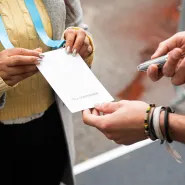
Event passes
From bustling conferences and vibrant festivals to exclusive VIP access, our cards provide a premium, eco-friendly solution. Elevate your attendees' experience while making a clear statement about your commitment to sustainability.
Find out more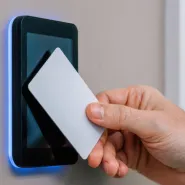
Access ID cards
Transform your access control systems with enviricard. It's how you make a clear statement about your commitment to the planet, all while ensuring seamless and secure entry for your members, employees, or guests.
Find out more
Membership cards
Looking to make your membership or loyalty scheme cards plastic-free? enviricard offers the sustainable solution without compromise. Our cards provide the perfect method for you to instantly print and issue member cards in the same way you can with plastic cards, but without the environmental burden.
Find out more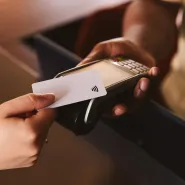
Contactless cards
Contactless payment. Enviripay™ from enviricard offers EMV banking standard embedded technology that enables you to migrate away from magnetic stripe for restricted and closed loop payments that run on Visa and Mastercard rails. Built with NXP technology fully compatible with tap to pay POS systems, enviriPay integrates seamlessly into your existing payment infrastructure.
Find out more
Enquire
Interested in making a real difference with your cards? We understand that switching to a sustainable card solution requires more than just good intentions.
Thank you
We’ll be in touch with you soon

Sustainability is fast rising up the “must have” credentials within our industry and having tried various different approaches, enviricards tick every box for us.